

Sensitive Complaint Intake & Difficult Caller Toolkit™
The Operational System for the Calls That Carry the Most Risk
A complete, ready-to-deploy system for the calls that fall outside the normal complaint, hostile callers, repeat callers, and callers who mention self-harm. Scripts, escalation matrices, risk flags, boundary letters, and manager QA tools, all built to protect your staff and your organization at the same time.

$59 · Digital download · Use immediately · Built for call centers, HR, and intake operations
Individual license: for one person's use, including personal printing. Need team training or sharing for up to 10 users? Request a Small-Team license before purchasing for team use. View purchase permissions.
Created by a founder with 15+ years of frontline, HR, and EEO experience.
What this toolkit helps with

Handle sensitive and high-risk calls consistently, so the hardest moments are the ones your team is most prepared for, not the ones they're left to figure out on their own.
When a caller mentions self-harm, crosses a line, or calls for the eighth time this month, and your team doesn't have an agreed way to handle it. Use it to take the improvising out of the calls that carry the most risk.

When you'd reach for it

Who it's for
Call centers and contact centers
HR operations and complaint-handling teams
Intake offices and triage roles
Healthcare, social services, and nonprofit hotlines
Compliance, ombuds, and EEO intake functions
Supervisors managing consistency and risk across a team

Built for safety and compliance
Clear scripts. Documented processes. Defensible language. Because the calls that carry the most risk are the ones that need the most structure, not the most improvisation.
What’s Inside
Seven situation-specific scripts
Covering the hardest calls: hostile callers, suicidal ideation redirection, repeat callers, misdirected calls, looping callers, supervisor demands, and fact-gathering.

Quick cards and risk flags
Condensed scripts built to sit at the desk, plus a risk-flag system that tells staff when to stop, document, and escalate; no guessing.

Escalation matrices and boundary letters
Clear pathways for when to redirect, escalate, or disengage, and professionally written letter templates for resetting expectations with repeat or unreasonable complainants.

Manager QA tools and policy guidance
A full intake QA checklist with manager sign-off, a policy and boundaries section, and staff support notes for the calls that follow people home.

How It Works

Contain
Steady the call with the right script


Document
Write it defensibly, every time

Follow the matrix. Don’t carry it alone
Escalate
Consistent. Defensible. People-first.
Common Questions
-
No. It gives staff safe, in-scope language for the moment a caller mentions self-harm, acknowledging, redirecting to the 988 Suicide & Crisis Lifeline, and closing within scope. The toolkit includes a full decision flow for when a situation is imminent enough to call 911. It's a communication and process tool, not clinical care.
-
The Script Pack is the language for the person on the call, what to say in the moment. This toolkit is the full operation around those calls: the same kind of scripts plus policy, escalation matrices, risk flags, documentation standards, boundary letters, and manager QA. If you want the words, start with the Script Pack. If you're standing up or strengthening a whole intake process, this is the larger system.
-
No. It's educational and operational. It helps your team apply your organization's own policies with clearer scripts, consistent documentation, and defined escalation, and it doesn't replace HR, legal, or compliance protocols.
-
Yes. The scripts, quick cards, and matrices are built for same-day use. The manager QA tools and policy section are there when you want to build it into a consistent standard across a team.
The resources support individual work and team training. Choose the license that covers your use: Individual for one person, or Small-Team for up to 10 current users in one organization’s team. Student instruction, larger groups, and external-client training require separate permission.
-
The structure is built to sit on top of your existing policies rather than replace them, and the language adapts to your setting.
You may adapt these practical tools for the licensed person's or covered team's internal procedures and communication needs. Keep existing copyright notices and identify People First Org Flow as the source on adapted materials. Make clear that your organization made the changes. This permission does not include republishing the resource as your own work or distributing it outside your license scope.
Preview
Try before you buy. Download the free Sample Pack, with fact-gathering prompts, a documentation example, and a roleplay scenario, to see how the approach works before you commit.
Buy the Sensitive Complaint Intake & Difficult Caller Toolkit™
Individual license: for one person's use, including personal printing. Need team training or sharing for up to 10 users? Request a Small-Team license before purchasing for team use. View purchase permissions.


Created by Tammy R. Brewington, Founder of People First Org Flow™
Frontline experience. HR expertise. People-first solutions that work in real life.
Not sure which tool fits?Answer a few questions about where calls get hard for your team, and the Practice Lab will point you to the tool that matches.
Find the gapRelated People First Org Flow Tools

Frontline Confidence™
The complete communication system for staying calm under pressure, from individual skill to a 30-day team rollout with QA tools and metrics.


Scenario Roleplay Playbook™
A facilitator-ready playbook for practicing difficult calls before they happen, eight scenarios with cue cards, debrief prompts, and wrap-up scripts.


Difficult Caller Script Pack™
Seven ready-to-use scripts and twenty boundary phrases for the calls that push your patience and your policy, hostile callers, repeat callers, long-winded callers, and more.

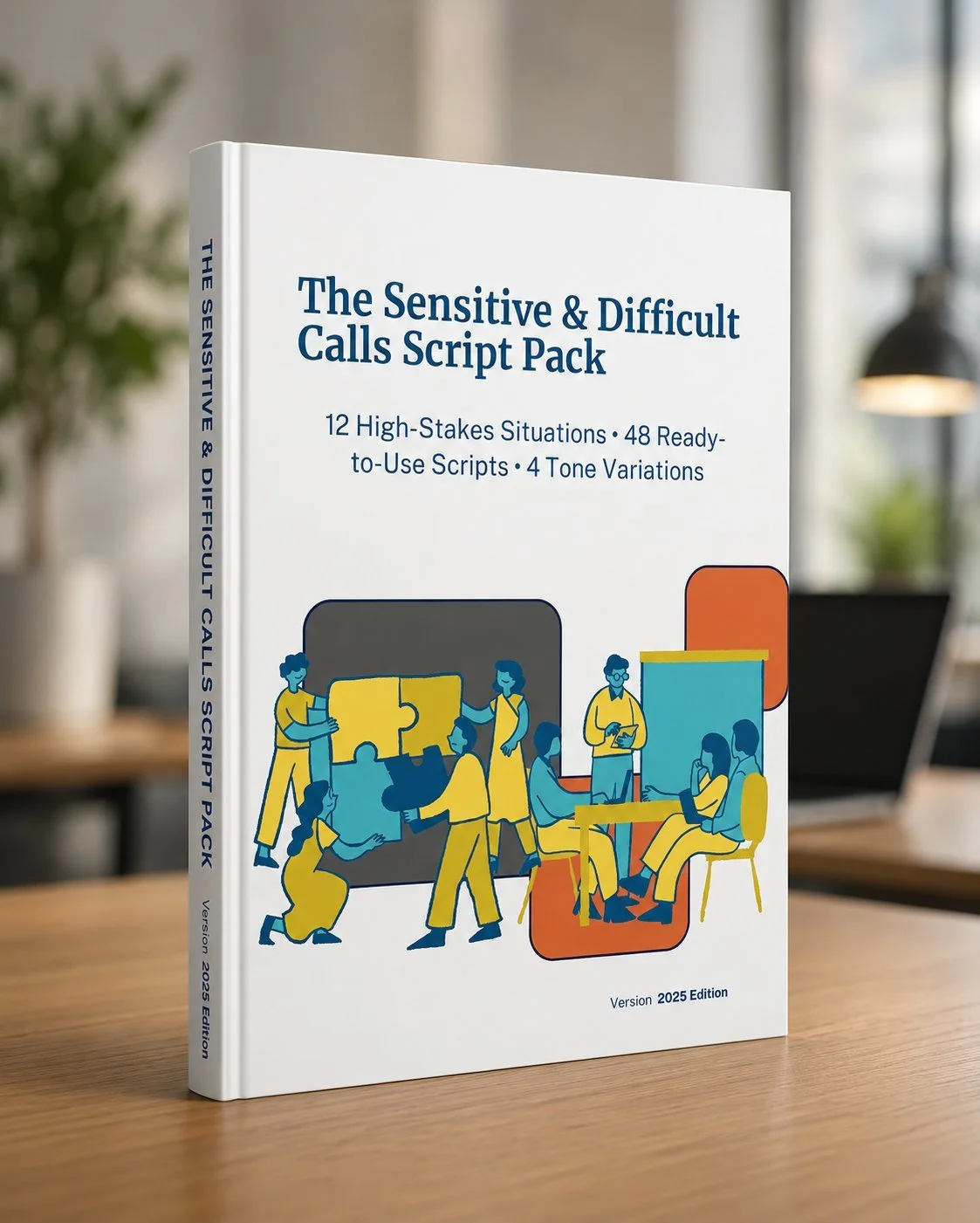
Sensitive & Difficult Calls Script Pack™
Scripts for high-stakes situations, discrimination, legal threats, bias accusations, in four tones, so staff can match their voice to what the moment needs.
